Learning Japanese as a first-time student means confronting three separate writing systems, a grammar structure that flips English logic on its head, and pronunciation rules that demand careful ear training from the start. It is, by most accounts, one of the more structurally demanding languages for English speakers to pick up.
AI-powered tools are changing that early experience. New learners now have ways to practise reading, pronunciation, and grammar patterns from day one, with real-time feedback that traditional textbooks simply cannot offer. However, these tools come with trade-offs worth understanding, alongside strategies for getting the most out of them.
For beginners, the most immediate benefit of AI tools is how they handle pronunciation. Japanese depends heavily on pitch accent and mora timing, subtle features that are easy to miss without feedback. Speech recognition technology built into language learning apps can detect these errors in real time, giving learners a chance to self-correct before bad habits take hold.
Beyond pronunciation feedback, AI language tutors open up conversational practice that would otherwise require a live partner. Tools like ChatGPT and Talkpal let beginners form sentences, ask questions, and work through dialogue at their own speed. There is no pressure to keep up, no awkward pauses, and no need to schedule around someone else’s availability.
Personalised learning is another area where these tools stand out. Rather than following a fixed syllabus, apps can adjust difficulty based on how a learner performs. Someone who picks up hiragana quickly might move to vocabulary sooner, while another learner gets more time with character recognition drills.
Structured beginner tracks also help. Duolingo offers gamified progression that keeps daily practice low-friction, and an AI-powered Japanese learning app like Langua pairs that structure with adaptive content tailored to individual weak points. Together, these features give early learners a practical foundation, even if they are studying entirely on their own.
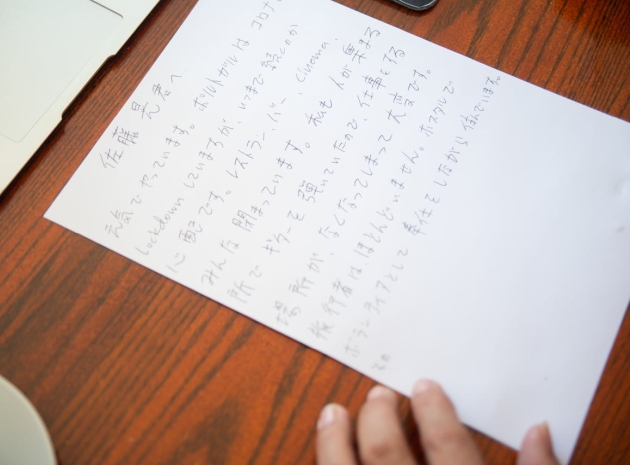
One of the first real hurdles in Japanese is the writing system itself. Unlike most languages that use a single alphabet, Japanese requires learners to work across three distinct scripts: hiragana for basic phonetic sounds, katakana for foreign loanwords, and kanji, the logographic characters borrowed from Chinese.
That triple layer of memorisation can feel overwhelming early on, which is exactly where AI tools offer practical help. Many apps use spaced repetition algorithms to schedule character reviews at carefully timed intervals. Instead of cramming all 46 hiragana in one sitting, learners encounter each character just as they are about to forget it, reinforcing long-term retention without wasted effort.
Writing practice has also improved through technology. Some digital learning platforms for young children and language apps now include stroke-order recognition, providing visual feedback when a character is drawn incorrectly. For scripts where stroke direction genuinely affects readability, this kind of instant correction helps build proper habits from the start.
ChatGPT adds another dimension by generating custom reading exercises matched to a learner’s current character level. A student who knows 20 kanji can request short sentences using only those characters, creating targeted practice that a static textbook cannot replicate.
That said, early kanji exposure works best when it follows a thoughtful sequence. Jumping into too many characters at once tends to undermine confidence rather than build it. The strongest approach pairs AI-driven review with a controlled introduction of new kanji, layering complexity gradually as recognition of hiragana and katakana becomes second nature.

AI tools work best when they fill specific gaps in a broader learning plan, not when they carry the entire weight of study. A well-rounded approach to Japanese still benefits from structured courses, textbooks, and human interaction, each contributing something that the others cannot easily replicate.
Japanese grammar, for instance, follows rules that textbooks lay out in a logical, progressive sequence. Working through a textbook chapter on particle usage or verb conjugation gives learners a framework that makes AI conversational practice far more productive afterwards. Without that foundation, chatbot exchanges can reinforce patterns a learner does not fully understand yet.
A human tutor brings something else entirely. Japanese politeness levels, known as keigo, shift based on social context in ways that AI still struggles to evaluate. A tutor can catch when a sentence is grammatically correct but socially inappropriate, a distinction that matters deeply in real Japanese communication. This kind of nuanced feedback reflects broader language development strategies in early education, where mixing methods produces stronger outcomes than relying on any single approach.
A practical daily routine might look something like this:
● Spend 15 to 20 minutes on textbook-based grammar study
● Follow with 10 to 15 minutes of AI-driven speaking practice to apply what was just learned
● Close with spaced repetition flashcards for vocabulary and kanji review
This kind of sequence lets each method reinforce the others. Conversational practice with an AI builds the confidence a learner needs before sitting down with a tutor or language partner, while structured courses provide the progression and accountability that self-directed app use often lacks.
For all their advantages, AI tools carry real limitations that beginners should recognise early. ChatGPT and similar models can produce Japanese that looks convincing but contains grammar errors, incorrect kanji readings, or phrasing no native speaker would actually use. A learner still working through hiragana has no reliable way to catch those mistakes, which means flawed output can quietly become part of their study material.
Cultural nuance presents another challenge. Japanese politeness registers shift depending on who is speaking, who is listening, and the social context surrounding the conversation. An AI language tutor may default to one register or mix them inconsistently, producing sentences that are technically grammatical but socially off.
There is also a risk of passive engagement. Tapping through app exercises or copying AI-generated answers can feel productive without actually building deep retention. Active recall, writing by hand, and producing language from memory remain harder to replace than they might seem.
Pronunciation feedback through speech recognition has improved considerably, but it still falls short of a trained human ear when it comes to subtle pitch accent distinctions or mora-level timing errors.
The most effective approach for beginners is picking one AI tool and using it consistently, whether that is a pronunciation app or a character recognition trainer. Trying to juggle multiple platforms at once tends to scatter focus rather than build it.
As foundational skills develop, layering in conversational AI alongside a textbook or tutor creates a more well-rounded study routine. Personalised learning features become more useful at this stage, since the algorithms have enough performance data to adapt meaningfully.
The goal is steady, structured progress. Tools should support that progress, not become a collection that sits mostly unused.

Introducing British Sign Language
A Unique Child

 follow us @TeachEarlyYrs